
At a time of escalating conflicts, growing displacement, shrinking resources, and increasing impunity, the report calls for a new paradigm for the humanitarian sector. It sets out bold and practical recommendations to rethink how humanitarian health responses are designed, governed, and delivered in some of the world’s most challenging settings.
The Commission brings together global leaders and experts committed to confronting and reshaping the humanitarian system. Its work seeks to challenge existing power structures in humanitarian health, influence global policy and practice, and amplify the voices of people affected by conflict and displacement.
This launch event will provide an opportunity to engage directly with Commission members and explore the report’s key findings and recommendations.
Participants will also have the chance to discuss the implications for humanitarian policy, practice, and partnerships in the years ahead.

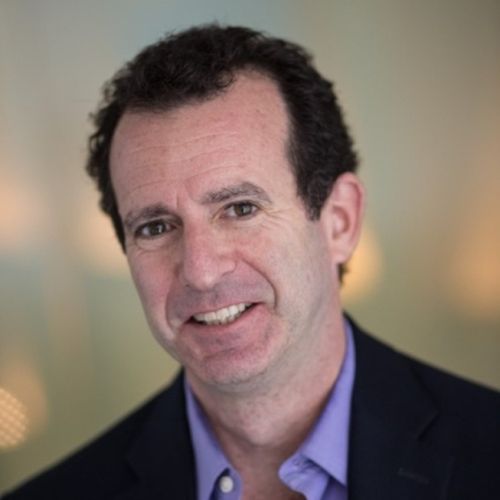

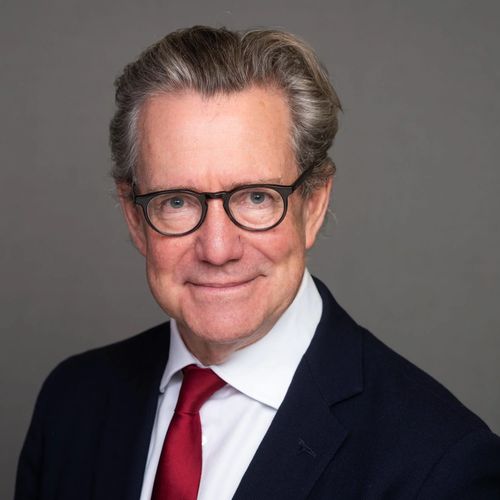



| 09.00 | Opening Karl Blanchet, Co-Chair, CHH–Lancet Commission on Health, Conflict, and Forced Displacement; Professor in Humanitarian Public Health, Director, Geneva Centre of Humanitarian Studies, Faculty of Medicine, University of Geneva |
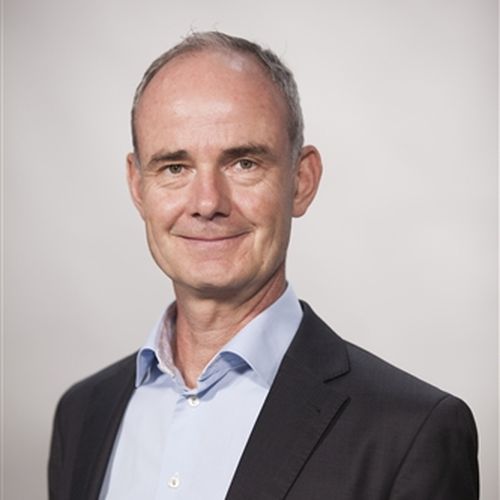
| 09.30 | Presentation of the Commission’s key findings Paul Spiegel, Co-Chair, CHH–Lancet Commission on Health, Conflict, and Forced Displacement; Director, Johns Hopkins Center for Humanitarian Health |
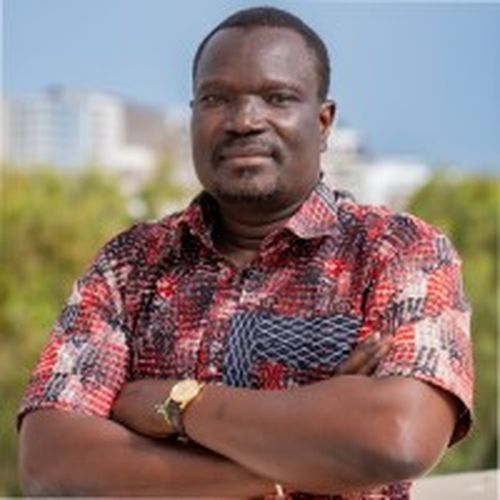
| 10.00 | Panel 1: Confronting the System: Key Themes from the Commission’s Report Exploring key aspects and recommendations of the report, including perspectives on international humanitarian law, humanitarian principles, finance, and health. Moderated by Karl Blanchet Panellists:
|
| 11.30 | Coffee Break |
| 11.30 | Panel 2: Reshaping the System: A Cross-Sector Conversation Bringing together perspectives from across the humanitarian sector to discuss the implications of the Commission’s findings and recommendations. Moderated by Paul Spiegel Panellists:
|
| 12.30 | Wrap up and closing remarks by Professor Paul Spiegel |
Registration is free but mandatory

Created by

The discussion at the World Health Assembly (WHA) is important because it aims to position health promotion as a central pillar of public policies, shifting from a care-centred approach to a comprehensive well-being approach based on action on the determinants of health and the engagement of all sectors of society.
A paradigm shift: from care to well-being
The document highlights a global framework for well-being (adopted in 2024) that seeks to reorient health systems towards health promotion, not only the treatment of disease. This implies recognising that health is primarily shaped by living conditions (social, environmental, and economic determinants).
A global policy priority under construction
The WHA discussion is key as it aims to firmly embed health promotion within policy agendas, in alignment with the Sustainable Development Goals and the Geneva Charter for Well-being.
Today, health promotion is still often secondary in public decision-making, despite being essential for building resilient and equitable societies.
A call for multisectoral and systemic action
The proposed framework emphasises an approach that “engages the whole of government and the whole of society.”
This directly strengthens approaches such as Health in All Policies and Healthy Cities, calling for transformation across governance, economic systems, and public policies.
An operational challenge: scaling up implementation
Finally, this discussion is strategic as it seeks to translate concepts into concrete implementation, through policy guidance, indicators, and actionable mechanisms for Member States.
👉 See preparatory document EB158/27 https://apps.who.int/gb/ebwha/pdf_files/EB158/B158_27-en.pdf
Three approaches developed by the WHO provide practical frameworks for acting on the determinants of health. They share a common goal: integrating health across all public policies and living environments. By mobilising action at different levels — from cities to national governments — they aim to transform the conditions that shape health in everyday life. These approaches offer practical levers to shift from a care-oriented model towards a prevention- and equity-oriented approach.
Creating Healthy Cities
This approach places health at the centre of local policies. It encourages cities to act on living environments (urban planning, transport, housing, social cohesion) by engaging local authorities, stakeholders, and citizens, in order to sustainably improve health and well-being.
👉 https://www.who.int/activities/creating-healthy-cities/creating-healthy-cities
Health in All Policies and intersectoral action capacities
This approach focuses on systematically integrating health considerations into all public policies (such as economy, education, transport, agriculture, etc.). The aim is to improve policy coherence and to act upstream on the determinants of health.
👉 https://www.who.int/activities/Promoting-health-in-all-policies-and-intersectoral-action-capacities
WHO urban health strategies
This global framework addresses the specific challenges of urban settings (inequalities, pollution, access to services). It is aligned with the Geneva Charter for Well-being, which calls for building well-being societies by acting on the structural determinants of health, and with the WHO global framework for integrating well-being into public health (2023–2024), which provides strategic guidance for transforming systems. These urban strategies promote integrated, evidence-informed action and collaborative governance to make cities healthier, more inclusive, and more resilient.
👉 https://www.who.int/publications/i/item/9789240116177
👉 https://www.who.int/publications/i/item/9789240084858
👉 https://www.who.int/publications/m/item/the-geneva-charter-for-well-being
15:30 – 17:30
This meeting is not open to the public.
It brings together stakeholders from Shanghai and Geneva who will explore opportunities for collaboration between Hospitals from Shanghai and Geneva University Hospitals.
12:30 – 14:30
This meeting is not open to the public.
It brings together stakeholders from Shanghai and Geneva who will explore opportunities for collaboration.
8:30 – 12:00
This meeting is not open to the public.
It brings together stakeholders from Shanghai and Geneva who will explore opportunities for collaboration.
The first session will explore the possibility of collaborating in the field of medical research.
The second session will explore opportunities for collaboration on tripartite projects involving China, Switzerland, and Africa. The role of digital tools in health programs and women’s health programs will be discussed in particular.
Established in 2006 by the University Hospitals of Geneva (HUG) and the University of Geneva (UNIGE), the Geneva Health Forum (GHF) is a Swiss not-for-profit initiative that brings together a diverse range of stakeholders to discuss and address global health challenges.
The GHF plays a pivotal role in the global health landscape, as a neutral and inclusive platform, fostering dialogue and collaboration among key players in the field, including policymakers, representatives from academia, civil society, and the private sector.
Its core mission is to facilitate constructive dialogue among these global health actors, which, in turn, contributes to the improvement of health policies and access to care worldwide. The Geneva Health Forum proudly collaborates with some of the most prominent international organizations based in Geneva.