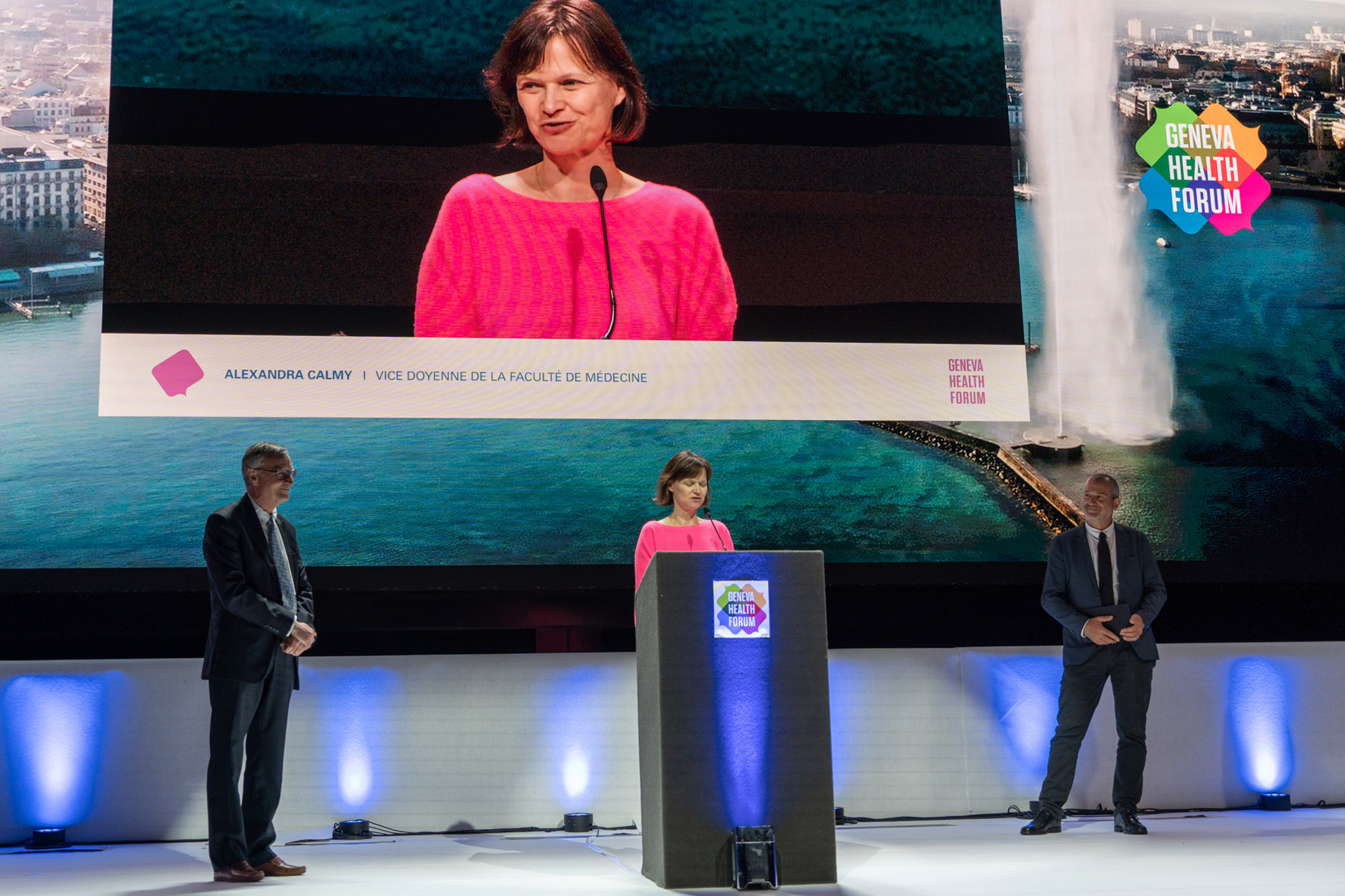

Recognized as the international capital of health, Geneva stands out not only for hosting major institutions, but for its unique ecosystem of initiatives, events, and collaborations that actively shape the global health agenda.
Throughout the year, the city convenes key moments that bring together policymakers, researchers, practitioners, and innovators. Each May, the World Health Assembly turns Geneva into the epicenter of global health decision-making. Major events such as the Geneva Health Forum 2026, the global AI summit in 2027, and IAS 2027 further demonstrate Geneva’s ability to connect science, innovation, and policy.
This momentum is reinforced by recurring gatherings that structure the global health and humanitarian community, including AidEx Geneva, the Humanitarian Networks and Partnerships Weeks, and the many side events held alongside the WHA. In parallel, major initiatives — such as the revision of the Sphere humanitarian standards and global health training programmes led by SSPH+ — contribute to advancing practices and strengthening capacities worldwide.
At the center of this ecosystem, the Geneva Health Forum plays a key role as a facilitating platform, helping to connect stakeholders, showcase initiatives, and foster collaboration throughout the year.
It is this unique combination of high-level events, transformative initiatives, and engaged actors that makes Geneva a true living laboratory for global health.

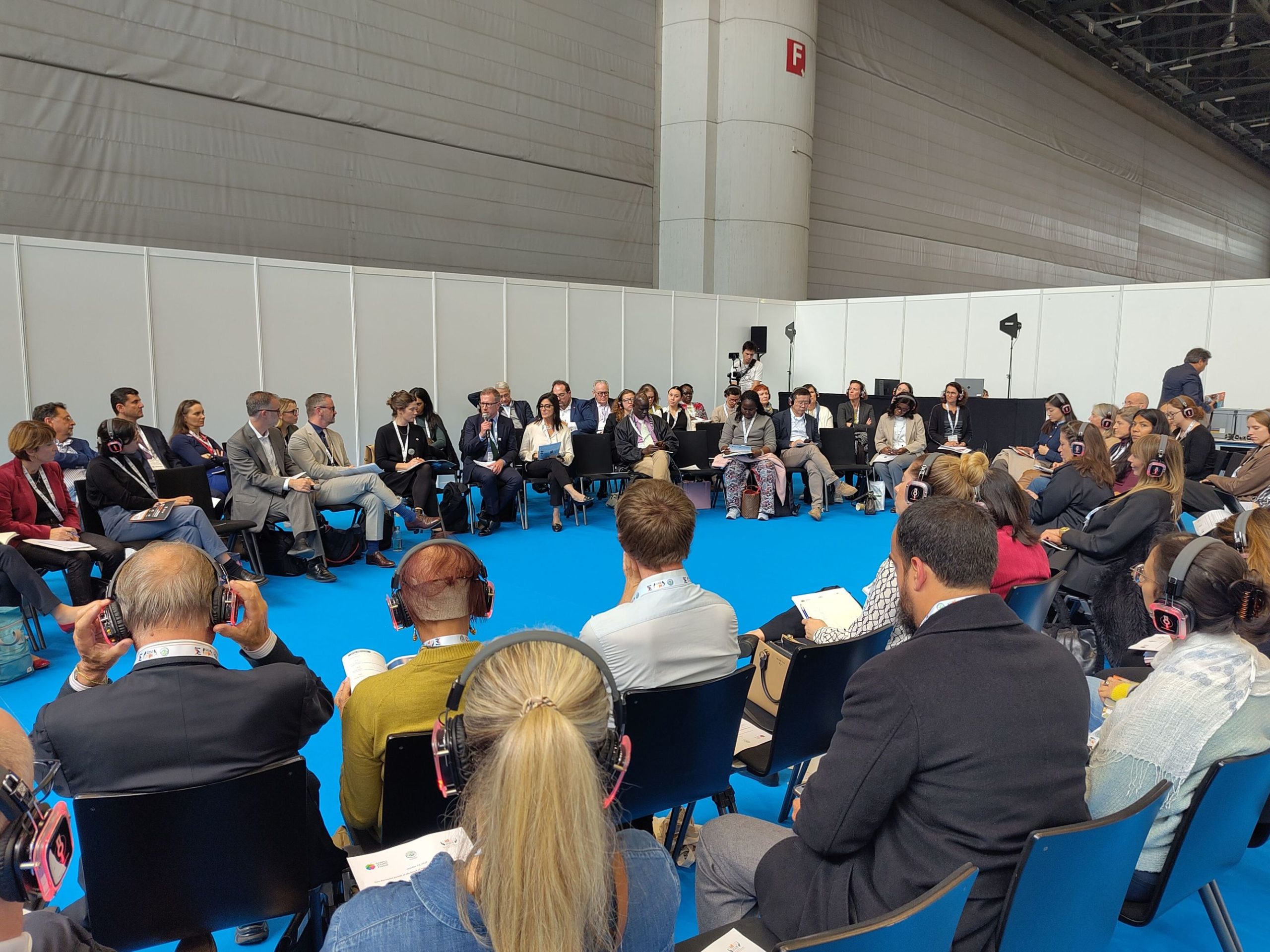
The GHF biennal conference will take place from November 10 to 12, 2026 at the Campus Biotech.
Under the theme “Rethinking Cooperation in Global Health”, this edition aims to critically reassess international cooperation models in light of today’s complex health challenges. The conference will bring together experts, policymakers, practitioners, researchers, and civil society representatives to foster dialogue, share knowledge, and generate actionable solutions.
A central objective of the conference is to amplify the voices of scientists and civil society actors in addressing major global health challenges, ensuring that their expertise and field experience contribute meaningfully to international decision-making processes.
A call for contributions will be launched in early May on the GHF website, inviting the global health community to actively shape the programme.
Each day will focus on a specific topic:
The global humanitarian context is changing rapidly. Climate crises, pandemics, protracted conflicts, and emerging operational risks require humanitarian practices to evolve in order to protect the dignity and safety of affected populations.
This is why Sphere, the NGO behind the Humanitarian Minimum Standards, is launching an open revision of its Handbook. The update aims to reflect recent developments in the sector and to incorporate the experiences and expertise of the international humanitarian community.
We invite organizations and experienced professionals to contribute to this essential process. Whether you are a trainer, technical expert, focal point, or regular user of the Sphere Handbook, your participation can make a real difference.
You can join the process by offering your expertise to:
Participating provides the opportunity to:
Join us in building humanitarian standards that address current and future challenges. To offer your expertise or learn more, contact Sphere today and help create a Handbook that continues to protect lives and dignity worldwide.

The Swiss School of Public Health (SSPH+) is a network of leading Swiss universities and institutions dedicated to advancing education and research in public and global health.
SSPH+ offers a wide range of courses covering topics such as epidemiology, health systems, infectious diseases, and health policy. These courses are designed for students, professionals, and anyone interested in international health challenges.
Whether you are looking to deepen your expertise, explore new perspectives, or connect with a global health community, SSPH+ courses provide valuable knowledge and skills to make a real impact in the field.
Explore the courses offered by SSPH+ and take your first step toward contributing to global health solutions.
The International AIDS Society (IAS) Conference is the world’s leading gathering of researchers, healthcare professionals, policymakers, and advocates working on HIV and related global health issues. It provides a platform to share the latest scientific advances, discuss policy innovations, and strengthen international collaboration in the fight against HIV.
The 2027 edition will take place in Geneva, from 12 to 17 July, offering participants a unique opportunity to engage with cutting-edge research, exchange experiences, and contribute to shaping the global HIV response.
Whether you are a scientist, clinician, or public health professional, the IAS Conference is the place to connect with the global HIV community and be part of the progress toward ending the HIV epidemic.
Mark your calendar and join us in Geneva for this important event!
The 2027 World Artificial Intelligence Summit will take place in Geneva from March 15 to 18, 2027. This premier global event will bring together AI experts, policymakers, industry leaders, and innovators to explore the latest developments, ethical considerations, and governance of artificial intelligence.
Geneva, as a hub for international diplomacy and innovation, is positioning itself as a global center for AI governance. Hosting the summit reflects the city’s commitment to fostering collaboration, responsible AI development, and global dialogue on technology shaping our future.
Join leaders from around the world in Geneva to engage with cutting-edge AI research, exchange ideas, and help shape the policies that will guide the next era of artificial intelligence
Throughout the year, Geneva hosts a range of major events focused on global health and humanitarian action, reflecting its dynamism as an international capital for health and humanitarian efforts. These gatherings bring together experts, practitioners, policymakers, and advocates from around the world to share knowledge, foster collaboration, and drive innovation.
Key events include:
These events underline Geneva’s unique position as a vibrant center for international cooperation in health, humanitarian action, and human rights.

Created by

She is a 30-year-old French photographer and videographer.
After working in the cultural sector for four years, she entered the humanitarian sector to give a voice to the most vulnerable people.
She had the opportunity to produce a documentary on the 40-year commitment of the NGO Première Urgence Internationale in Myanmar, where its work lies at the intersection of emergency aid and development.
In November 2025, she traveled to the DRC, specifically to Ituri and North Kivu, to document the NGO’s activities in the region, as well as the living conditions of thousands of families affected by the conflict.
Far from the sensationalist clichés people may have grown accustomed to, her work focuses on the resilience of communities, mutual aid, and the dedication of humanitarian workers.
Through this report, her goal is above all to remind audiences that behind the shocking statistics seen every day, there are individuals whose lives have been shattered by conflict.
To contact Tania RIeu : trieu@premiere-urgence.org
Cora Portais (b. 1993, Ivory Coast) is a Franco-Senegalese documentary photographer whose work engages with contemporary social, human, and political issues. Her practice explores the ways in which photography can bear witness to lived realities while questioning the power structures embedded in the production of images.
She began her photographic work at the age of 21 with a long-term project on access to education and healthcare for children with albinism in Senegal. The project received international recognition and was exhibited in Washington by the World Bank, as well as in Dar es Salaam and Nairobi, and presented during an international conference on albinism organized by the Open Society Foundation in South Africa.
Originally trained in journalism in France, where she worked with the Africa desk of Courrier International, Portais further developed her documentary approach in 2016 at The Market Photo Workshop in Johannesburg, a school founded by photographer David Goldblatt. There, she refined a socially engaged photographic practice while continuing her research on albinism and documenting marginalized urban communities in South Africa.
After returning to Senegal in 2017, she initiated several personal projects, including Etakaï, a series produced in Casamance that reflects on cultural transmission and the persistence of traditional practices within contemporary societies. In 2018, she was a semi-finalist in Magnum Photos’ Photography & Social Justice Program. Her work has since been presented in Europe and Africa, notably with the German gallery IkA, at the Iziko National Museum in Cape Town, and during festivals and the Off program of the Dakar Biennale.
Since 2019, Cora Portais has worked with the medical humanitarian organization ALIMA (The Alliance for International Medical Action), producing photographic documentation on public health issues in crisis contexts across the Sahel and Central Africa. Working in regions affected by conflict, displacement, and climate-related challenges – including the Central African Republic, Cameroon, and the Sahel – she documents themes such as epidemics, malnutrition, and maternal and child health.
Grounded in a sustained commitment to social justice, her work reflects on the ethics of documentary practice and the responsibility of the photographer in shaping visual narratives. Through long-term engagement and collaboration with the communities she photographs, Portais seeks to create images that move beyond representation to question how stories are told, who tells them, and for whom.
To contact Cora Portais : cora.portais@alima.ngo
The discussion at the World Health Assembly (WHA) is important because it aims to position health promotion as a central pillar of public policies, shifting from a care-centred approach to a comprehensive well-being approach based on action on the determinants of health and the engagement of all sectors of society.
A paradigm shift: from care to well-being
The document highlights a global framework for well-being (adopted in 2024) that seeks to reorient health systems towards health promotion, not only the treatment of disease. This implies recognising that health is primarily shaped by living conditions (social, environmental, and economic determinants).
A global policy priority under construction
The WHA discussion is key as it aims to firmly embed health promotion within policy agendas, in alignment with the Sustainable Development Goals and the Geneva Charter for Well-being.
Today, health promotion is still often secondary in public decision-making, despite being essential for building resilient and equitable societies.
A call for multisectoral and systemic action
The proposed framework emphasises an approach that “engages the whole of government and the whole of society.”
This directly strengthens approaches such as Health in All Policies and Healthy Cities, calling for transformation across governance, economic systems, and public policies.
An operational challenge: scaling up implementation
Finally, this discussion is strategic as it seeks to translate concepts into concrete implementation, through policy guidance, indicators, and actionable mechanisms for Member States.
👉 See preparatory document EB158/27 https://apps.who.int/gb/ebwha/pdf_files/EB158/B158_27-en.pdf
Five major approaches developed by the World Health Organization provide practical frameworks for acting on the determinants of health. They share a common objective: integrating health considerations across all public policies and living environments. By mobilising action at multiple levels — from local to global — these approaches aim to transform the conditions that shape health in everyday life. Together, they offer concrete levers to move from a care-oriented model towards a prevention- and equity-driven approach.
Social Determinants of Health framework
This foundational framework provides a comprehensive understanding of how social, economic, and political factors influence health outcomes and generate health inequalities. It distinguishes between structural determinants (such as governance, public policies, and social stratification) and intermediary determinants (including living conditions, behaviours, and access to services). It offers a conceptual basis for intersectoral action and is a key reference for addressing the root causes of health inequities.
👉 https://www.who.int/publications/i/item/9789241500852
Primary Health Care
Primary Health Care (PHC) is a whole-of-society approach to health that aims to ensure the highest possible level of health and well-being. It combines essential health services with action on the broader determinants of health, community empowerment, and multisectoral policies. PHC is central to achieving universal health coverage and reducing health inequalities by bringing services closer to where people live and by addressing their needs in a comprehensive way.
Creating Healthy Cities
This approach places health at the centre of local policies and urban governance. It encourages cities to act on key determinants such as urban planning, transport, housing, environment, and social cohesion. By engaging local authorities, stakeholders, and citizens, it promotes participatory and sustainable actions to improve health and well-being in urban settings.
👉 https://www.who.int/activities/creating-healthy-cities/creating-healthy-cities
Health in All Policies and intersectoral action capacities
This approach focuses on systematically integrating health considerations into all public policies (such as economy, education, transport, agriculture, etc.). The aim is to improve policy coherence and to act upstream on the determinants of health.
👉 https://www.who.int/activities/Promoting-health-in-all-policies-and-intersectoral-action-capacities
WHO urban health strategies
This global framework addresses the specific challenges of urban settings (inequalities, pollution, access to services). It is aligned with the Geneva Charter for Well-being, which calls for building well-being societies by acting on the structural determinants of health, and with the WHO global framework for integrating well-being into public health (2023–2024), which provides strategic guidance for transforming systems. These urban strategies promote integrated, evidence-informed action and collaborative governance to make cities healthier, more inclusive, and more resilient.
👉 https://www.who.int/publications/i/item/9789240116177
👉 https://www.who.int/publications/i/item/9789240084858
👉 https://www.who.int/publications/m/item/the-geneva-charter-for-well-being
15:30 – 17:30
This meeting is not open to the public.
It brings together stakeholders from Shanghai and Geneva who will explore opportunities for collaboration between Hospitals from Shanghai and Geneva University Hospitals.
12:30 – 14:30
This meeting is not open to the public.
It brings together stakeholders from Shanghai and Geneva who will explore opportunities for collaboration.
8:30 – 12:00
This meeting is not open to the public.
It brings together stakeholders from Shanghai and Geneva who will explore opportunities for collaboration.
The first session will explore the possibility of collaborating in the field of medical research.
The second session will explore opportunities for collaboration on tripartite projects involving China, Switzerland, and Africa. The role of digital tools in health programs and women’s health programs will be discussed in particular.
Established in 2006 by the University Hospitals of Geneva (HUG) and the University of Geneva (UNIGE), the Geneva Health Forum (GHF) is a Swiss not-for-profit initiative that brings together a diverse range of stakeholders to discuss and address global health challenges.
The GHF plays a pivotal role in the global health landscape, as a neutral and inclusive platform, fostering dialogue and collaboration among key players in the field, including policymakers, representatives from academia, civil society, and the private sector.
Its core mission is to facilitate constructive dialogue among these global health actors, which, in turn, contributes to the improvement of health policies and access to care worldwide. The Geneva Health Forum proudly collaborates with some of the most prominent international organizations based in Geneva.